From Haugesund to Seoul: How Three Nobel Laureates Carried Places Into Literature
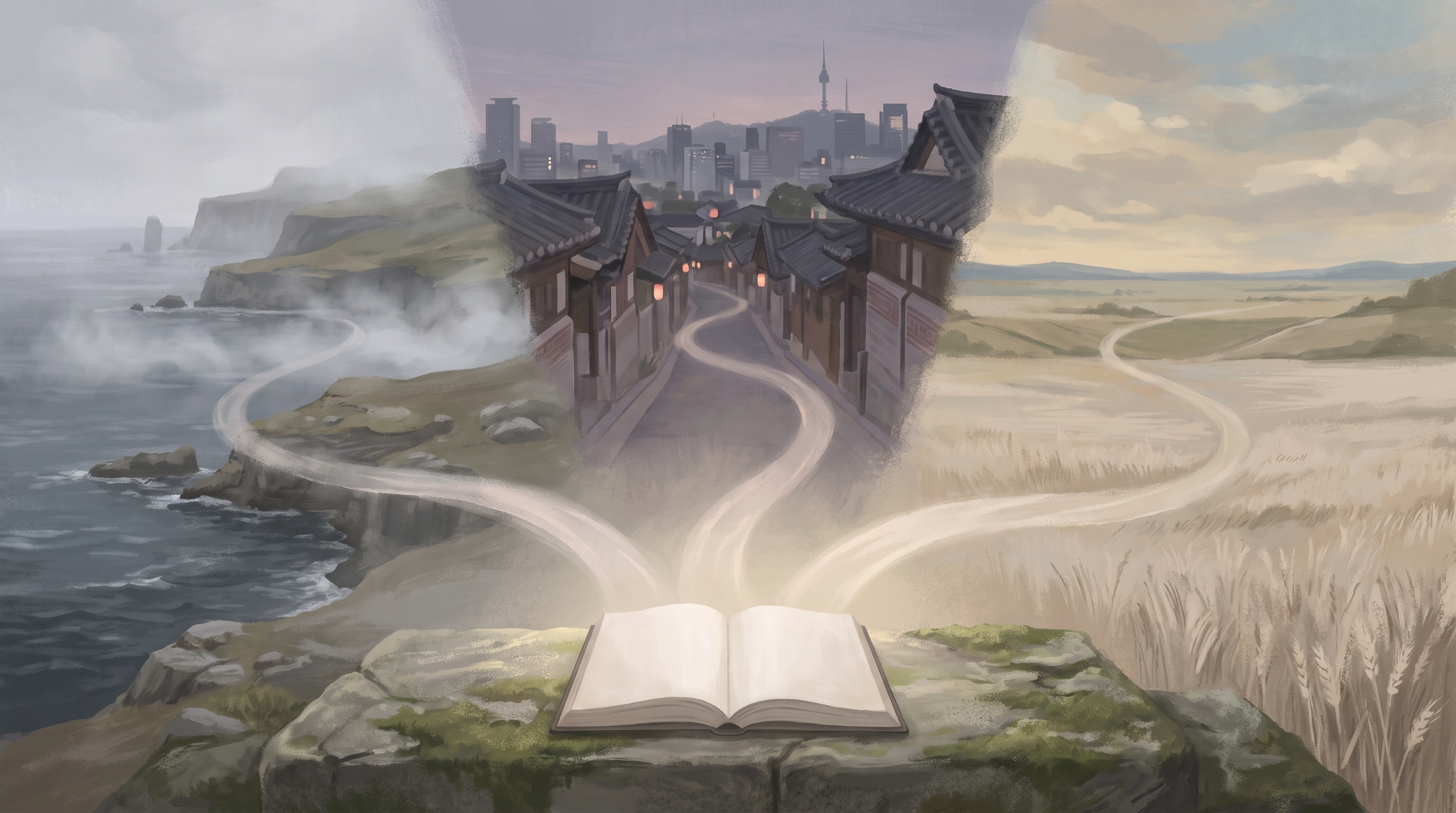
Three Octobers in a row, the Nobel Prize in Literature went to a writer whose life began in a different part of the world: Haugesund in Norway, Gwangju in South Korea, and Gyula in Hungary. Jon Fosse won in 2023, Han Kang in 2024 and László Krasznahorkai in 2025. Put side by side, their official Nobel records make a small exercise in literary geography. They list where each writer was born and, in two cases, where each lived when the prize was announced, and each includes a one-sentence citation explaining the award. What follows is a close reading of those records. The comparisons and interpretations are our editorial analysis, not statements from the writers.
Three prizes, three starting points
The dates are easy to line up. Jon Fosse was born on September 29, 1959, in Haugesund, Norway, and received the prize on October 5, 2023. Han Kang was born on November 27, 1970, in Gwangju, South Korea, and was awarded on October 10, 2024. László Krasznahorkai was born on January 5, 1954, in Gyula, Hungary, and received the prize on October 9, 2025.
The order of the awards doesn't match the order of the births. The oldest of the three, born in 1954, was honored last, and the youngest, born in 1970, came in between. Beyond a Nobel year, what the three share is a named place of origin in the record and a citation that tries to sum up a whole body of work in a single clause.
Jon Fosse: Haugesund, two countries and the unsayable
Fosse's record starts in Haugesund, Norway. At the time of the prize, it lists two countries of residence, Norway and Austria. It names no specific towns in either country, and we won't guess at them. Still, the record itself describes a writer whose life, at least on paper, spans two national settings.
The Swedish Academy honored him "for his innovative plays and prose which give voice to the unsayable." Our reading is this: a writer praised for voicing what can't be said, who is also recorded as living in more than one country, invites us to think about distance as a working condition. Distance from a birthplace can leave room for quiet, and quiet can make room for what usually goes unspoken. That's an interpretation, not a biographical claim. The record gives us the countries and the citation. It doesn't tell us how he experiences moving between them.
Han Kang: from Gwangju to Seoul
Han Kang's record traces a shorter move on the map: born in Gwangju, with her residence listed as Seoul, both in South Korea. She was cited "for her intense poetic prose that confronts historical traumas and exposes the fragility of human life."
The citation doesn't say which histories it means, and the record doesn't link her birthplace to her subjects. We leave that connection open. What the pairing does suggest is that literary geography isn't only about crossing borders. A writer can stay within one country and still work from the distance between the city of her birth and the city she lives in. For readers, the citation offers a lens: attention to how the past stays attached to places and bodies, and to how fragile a single life can be.
László Krasznahorkai: Gyula and a visionary oeuvre
Krasznahorkai's birthplace is recorded as Gyula, Hungary. Here we stay with that starting point and don't chart where he lived later. The Nobel committee recognized him "for his compelling and visionary oeuvre that, in the midst of apocalyptic terror, reaffirms the power of art."
Of the three citations, his has the widest reach. It doesn't point to a place or a particular history. It sets art against a sense of catastrophe on a large scale. If Fosse's citation looks inward toward the unsayable and Han Kang's looks back toward historical wounds, Krasznahorkai's looks toward endings, and toward the possibility that art can still hold up when facing them.
What the records show, and what they leave out
Read together, the three citations share a vocabulary: the unsayable, the fragility of human life, and apocalyptic terror answered by the power of art. None of them celebrates a place directly. Each one describes something close to endurance, whether that means speaking through silence, facing inherited trauma, or making art under a sense of catastrophe. You could call that a shared language of creative solitude, but the phrase is our editorial framing, not the Academy's.
The records have limits worth stating plainly. They give birthplaces, some residences and a single sentence of praise. They can't tell us what Haugesund, Gwangju, Seoul or Gyula mean to the writers themselves, or how each experiences moving between places. For anyone interested in how cities and regions shape writing, these records work best as a starting map. The fuller answers are in the books, and in whatever the writers choose to say for themselves.
Nobel Prize API